
Pilot Hotel Package Ideas in 30 Days With Templates for Hoteliers

The packages that earn the best return combine an occasion or experience with a convenience upgrade, things like breakfast, late checkout, or a local activity bundled around a room. The single rule that matters most: present a small curated selection of add-ons at the room-selection step or in the pre-arrival window, with clear flat pricing and a one-tap purchase button. Get that timing right and you typically see a lift in ADR and happier guests, because the offer feels helpful instead of pushy.
TL;DR:
- Present a curated selection of add-ons at booking or pre-arrival with clear flat pricing and a simple one-tap purchase process to increase conversion.
- Bundle items like experiences or meals around specific guest occasions to boost average daily rate, RevPAR, and repeat bookings without adding new inventory.
- Use tried-and-true templates like romantic getaways, family packages, or wellness offers, and test niche ideas such as pet-friendly or micro-wedding packages through short, controlled runs.
- Price flat items like spa credits or bottles of wine based on cost and desired margin, and ensure full, upfront disclosure of prices to build guest trust.
- Schedule packages strategically around seasonal demand and promote them via website landing pages, targeted email campaigns, and local partnerships to maximize visibility and bookings.
Table of Contents
- 2. Why Hotel Packages Increase Revenue and Improve Guest Experience
- 3. Common, High-Converting Package Templates (Copy-Ready Examples)
- 4. Unique and Niche Package Ideas to Differentiate Your Property
- 5. How to Price and Package Offers: Rules, Math, and Presentation
- 6. How and When to Sell Packages: Booking-Engine Placement and Upsell Timing
- 7. How to Promote Packages: Website, Email, OTA Copy, Social, and Partnerships
- 8. Measuring Success: KPIs, A/B Testing Basics, and Common Pitfalls
- 9. How Hotelia Helps Launch Commission-Free Packages and Upsells
- 10. What a Hotel Package Is
- 11. Legal and Contractual Considerations for Hotel Packages
- 12. Seasonal and Market Demand Analysis to Optimize Package Timing
- 13. Staff Training and Operational Challenges for Delivering Package Experiences
- 14. Author Perspective: Start Small, Iterate, and Protect Guest Trust
- 15. Try Hotelia to Launch Package Upsells Without Losing a Cut to Commission
- Sources
- FAQ
2. Why Hotel Packages Increase Revenue and Improve Guest Experience
A good package does two jobs at once. It raises what a guest spends per booking, and it makes the choice to book direct instead of through an OTA feel like a better deal. When a guest sees a room bundled with breakfast and a late checkout, they are not comparing your nightly rate to a competitor’s anymore. They are comparing value, and that is a comparison you can win.
Packages also change how people decide. A “date night” bundle primes a couple to think about the occasion, not just the bed. A family bundle with breakfast included removes a decision guests would otherwise make on arrival, which reduces friction and often increases satisfaction because nothing feels like a surprise fee.
The metrics that tend to move when packages are done well:
- Average Daily Rate (ADR) rises because guests pay for bundled value instead of shopping only on room price.
- RevPAR improves as more of your available inventory sells at a higher effective rate.
- Attach rate, the share of bookings that include at least one add-on, becomes your clearest signal that curation and timing are working.
- Repeat bookings often increase, since a guest who had a smooth, well-packaged stay has a reason to come straight back to your website next time.
None of this requires new inventory. It requires bundling what you already have in a way that matches a specific guest’s reason for traveling.
3. Common, High-Converting Package Templates (Copy-Ready Examples)
These five templates cover most of the demand you will see across a typical calendar year. Each one can be built with items you already have on property, priced to protect margin, and adjusted for your specific guest mix.
- Romantic getaway. Room plus a bottle of wine, late checkout, and a couples’ spa credit if you have one. Price it as a flat package rate rather than itemizing each piece, since couples respond to the idea of a complete evening rather than a shopping list.
- Family package. Room plus breakfast for the whole party and a small welcome gift for kids, such as an activity kit. Price breakfast as one flat stay add-on so the family sees the full value upfront.
- Business or remote-work package. Room plus a reliable workspace setup, early check-in, and a coffee or espresso credit. Flat-fee this one since business travelers want a predictable, expensable total.
- Wellness or spa package. Room plus a spa treatment credit and a healthy breakfast option. This template carries the highest margin when the spa credit is capped at a set dollar amount rather than a specific treatment, which protects you from underpricing a premium service.
- Dining or all-inclusive package. Room plus dinner and breakfast, priced as one flat stay package. This one takes the most operational coordination since it touches your restaurant or a local partner, but it also tends to produce the highest per-booking spend.
For fulfillment, treat every voucher-based item (spa credits, dining credits, activity tickets) as inventory you track the same way you track rooms. Set a daily cap on how many package bookings your spa or kitchen can actually support before you list the package as available, and build a simple redemption code into your booking confirmation so front desk and other departments can verify what a guest already paid for.
Pro Tip: Price every template as a clear flat package rate, with the full value visible upfront so each guest segment can budget the stay easily.
4. Unique and Niche Package Ideas to Differentiate Your Property
The templates above cover volume. These ideas cover attention, the kind that gets your property mentioned in a local blog or shared on social media because it is genuinely different from what the hotel down the street offers.
- Local-experience bundles. Partner with a nearby brewery, farm tour, or hiking guide and bundle their activity with your room at a fixed combined price.
- Pet-friendly packages. Include a pet bed, treats, and a nearby dog-walking route map, which costs you very little but wins loyalty from a guest segment many hotels ignore.
- Micro-wedding packages. Bundle a small event space, a block of rooms for guests, and a preferred vendor list for catering and photography.
- Photo-stay packages. Partner with a local photographer for a short on-site session, appealing to couples, families, and social media minded solo travelers alike.
- Workcation retreats. Combine a week-long stay rate, a dedicated workspace, and a mid-week local excursion for remote workers looking to extend a trip.
Local partnerships work best when you handle the money simply: sell the bundled package through your own booking engine, pay the partner a fixed rate per redemption, and give guests a paper or digital voucher they hand over on-site. One useful example of building a lodging-and-dining bundle with a local partner comes from Wild Foodz’s breakdown of combining lodging and dining, which walks through how a property and a nearby restaurant structure a joint offer.
To test any of these without overcommitting, run a 30-day experiment: pick one niche package, cap it at a small number of bookings, and track whether it earns more attention (social shares, direct inquiries) than a standard template earns in the same window. If it does, expand it. If it does not, retire it quietly and try the next idea.
5. How to Price and Package Offers: Rules, Math, and Presentation
Use clear flat pricing for each add-on or package. For items that scale with length of stay, like breakfast or parking, calculate the expected fulfillment cost across the stay before setting one transparent price. One-time experiences, like a spa credit or a bottle of wine, also work naturally as flat add-ons, keeping the math simple for guests and for your own margin tracking.
A simple margin-protecting formula: take your cost to deliver the add-on, add your target margin, then round to a guest-friendly price point. Say a spa credit costs you $30 to provide and you want a 40% margin. Your price is $30 divided by (1 minus 0.40), which is $50. Round that to $49 or $55 depending on your brand’s pricing style, and you protect your margin while keeping the number easy to read.
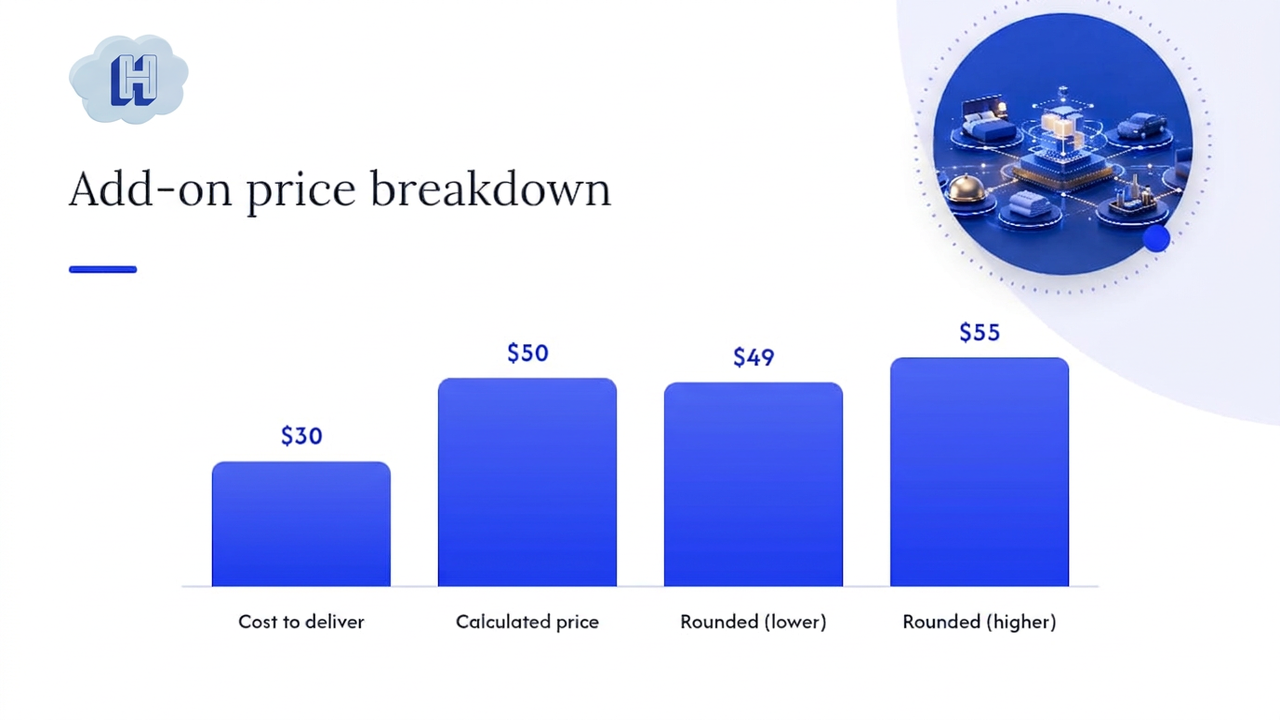
Value-led copy matters as much as the math. Describe what the guest gets to experience, not just what is included. And disclose the full price, taxes and fees included, before checkout. The global market for packaged travel offerings continues to show strong demand, which supports the case for investing in bundles rather than treating them as an afterthought.
Before you launch a package, confirm:
- Your fulfillment partner (spa, kitchen, local vendor) can support the volume you are advertising.
- Your booking engine can display the full price, including taxes, before the guest pays.
- Your front desk and any partner staff know how to redeem the package without confusion.
- Your cancellation and refund policy for the package matches your standard room policy or is clearly stated as different.
A large share of package conversions come down to two factors: timing and curation, a point echoed in Cloudbeds' hotel upsells playbook: offers presented at the right moment with a short curated list outperform long menus shown at the wrong time.
6. How and When to Sell Packages: Booking-Engine Placement and Upsell Timing
Timing decides whether a package converts or gets ignored. The room-selection step, the moment a guest has picked a room but has not yet paid, is the single best place to introduce add-ons, since the guest is already in a buying mindset. Industry upsell playbooks consistently find that the best-performing add-ons are high perceived value, low fulfillment friction items sold at exactly this moment or during the pre-arrival window.
The pre-arrival window shortly before check-in is your second big opportunity. Guests who have already committed to the stay are often more receptive to add-ons here than they were at booking, which means pre-arrival upsell revenue can rival what you earn during the booking flow itself.
A few rules keep this from feeling like a sales pitch:
- Show only three to five relevant add-ons at a time, chosen based on booking signals like party size or length of stay.
- Check real-time availability before sending any day-of offer, so you never sell a spa slot or dinner seating that does not exist.
- Use a photo, one-line benefit, and clear flat price for every add-on card, since bare line-item pricing converts worse.
- Keep the purchase action to a single tap, with the total price visible before the guest confirms.
Pro Tip: Hold off on dynamic pricing for add-ons until your fulfillment is rock solid. Publicly variable prices for similar guests can damage trust faster than a flat price ever will.
7. How to Promote Packages: Website, Email, OTA Copy, Social, and Partnerships
Getting the package built is half the job. Getting the right guest to see it at the right moment is the other half.
- Build a dedicated landing page for each major package and feature it in your website’s hero section, not buried in a rates page.
- Segment your email list by past booking behavior, then send targeted campaigns, a family package to guests who booked with children before, a romantic package to couples.
- Use a pre-arrival email sequence timed to the three to seven day window, offering the same curated add-ons your booking engine surfaces.
- List packages carefully on OTAs where you must, but always link your own website’s package landing page in guest-facing communication so direct bookers see the full, unbundled value.
- Partner locally with restaurants, tour operators, or event vendors, and consider a short influencer stay in exchange for content, since third-party validation often outperforms your own marketing copy for niche packages.
Direct booking channels matter here because every dollar earned outside an OTA stays with the property instead of being split with a third party, which makes your own website the highest-margin place to sell any package.
8. Measuring Success: KPIs, A/B Testing Basics, and Common Pitfalls
Track four numbers: attach rate (the share of bookings with an add-on), ADR, RevPAR, and conversion lift from any specific package or upsell placement. Attach rate is your fastest read on whether curation and timing are working.
Run a simple A/B test: show one guest segment the curated add-on set at room-selection, show a control group no upsell prompt at all, and compare attach rate and total booking value between the two. Give the test enough bookings, several weeks at minimum for most independent properties, before drawing conclusions.
- Watch for hidden fees or drip pricing, since surprise charges at checkout undo any goodwill your package built.
- Avoid declaring a test won or lost after only a handful of bookings, since small samples swing wildly.
Curated sets of three to five well-presented add-ons consistently outperform long menus, because guests face less decision fatigue at checkout.
9. How Hotelia Helps Launch Commission-Free Packages and Upsells
Hotelia’s booking engine is built for exactly the sequence described above. You configure add-ons once through Revenue Builder, and guests see them at room-selection with clear flat pricing, paid securely through your own Stripe account with zero commission on the transaction.
- Customizable add-ons let you build the romantic, family, or wellness templates from earlier in this article without extra development work.
- A built-in pre-check-in email reaches guests the day before arrival, and the Klaviyo integration lets you run a longer three to seven day pre-arrival upsell sequence.
- Built-in analytics track your add-on revenue, so you can see within weeks which bundle is earning its place.
A practical pilot: enable one package, set three to five curated add-ons, and watch attach rate for 90 days before deciding whether to expand it.
10. What a Hotel Package Is
A hotel package bundles a room stay with one or more additional items, an experience, a meal, an upgrade, or a service, sold together at a single price rather than as separate line items. The bundle can use one clear flat price for the stay, whether it includes breakfast across the visit, a single spa credit, or a bottle of wine on arrival.
What makes something a package rather than just a list of hotel amenities is the intentional pairing: the items are chosen to match a specific occasion or guest need, a wedding anniversary, a family trip, a work stay, and marketed as one decision instead of many. A guest booking a “romantic getaway” package is buying an evening, not shopping for wine by the glass.
11. Legal and Contractual Considerations for Hotel Packages
Every package needs a cancellation policy that guests can find before they pay, ideally matching or clearly differing from your standard room policy so there is no confusion at refund time. State exactly what is included and excluded in plain language: does the spa credit cover gratuity, does breakfast cover the whole party, is the wine bottle a specific label or a “house selection.”
Liability matters most with third-party partners. If a local tour operator or restaurant is part of your bundle, your contract with them should specify who is responsible if the experience is delayed, canceled, or delivered below the standard the guest expected. Keep a written agreement, even a short one, for any recurring local partnership rather than relying on a verbal handshake.
Disclose the full price, including taxes and any resort or service fees, before the guest completes payment. This is both a trust issue and, depending on your jurisdiction, a compliance requirement, so check your local consumer protection rules or consult a professional if you are unsure how they apply to bundled pricing.
12. Seasonal and Market Demand Analysis to Optimize Package Timing
Package performance shifts with the calendar, and matching your bundle to demand rather than fighting it is the more efficient path. A wellness package tends to perform best during traditionally slower shoulder seasons, when guests are looking for a reason to travel and a relaxing offer meets that need directly. A family package performs best around school holidays, while a business or workcation package performs best in the traditionally quieter midweek periods many properties otherwise discount aggressively.
Demand for packaged travel offerings has stayed strong globally, which suggests guests are increasingly open to bundled convenience rather than treating it as an unnecessary upsell. Use your own historical occupancy data first: look at your slowest three months over the past year and build or promote a package specifically timed to fill that gap, rather than running the same bundle year round.
Review your package calendar quarterly. A romantic package that performs well around a major holiday may need fresh copy or a different add-on mix by the next season to avoid feeling stale to repeat guests browsing your site.
13. Staff Training and Operational Challenges for Delivering Package Experiences
A package is only as good as its fulfillment. If a guest buys a breakfast bundle and the front desk was not told about the reservation’s inclusions, the guest experiences a broken promise instead of a bonus.
Train front desk and housekeeping staff on every active package before it goes live, not after the first guest arrives confused. A short one-page reference sheet per package, listing exactly what is included, how to verify a redemption code, and who to contact if a partner vendor cannot deliver, solves most of this.
The most common operational failure point is capacity mismatch: selling more spa credits or dinner reservations than your team can actually deliver on a given night. Set a hard daily cap on any package tied to limited resources, and review that cap monthly as demand shifts.
14. Author Perspective: Start Small, Iterate, and Protect Guest Trust
The instinct with packages is to build five at once. Resist that. Start with one curated package, run it for a real test window, and let the attach rate and incremental ADR tell you whether it earns a permanent spot.
Transparent pricing beats clever pricing every time. A guest who sees a clear flat breakfast add-on trusts you more than one who discovers a fee buried at checkout, and that trust is what brings them back to book direct next time. Measure the two numbers that matter, attach rate and incremental ADR, and let those decide what survives past the pilot.
Hotelia
15. Try Hotelia to Launch Package Upsells Without Losing a Cut to Commission
Every package idea in this article works better when the booking engine behind it does not take a cut of your work. Hotelia charges no commission on bookings or add-ons, so a $50 spa credit or a $30 breakfast bundle keeps its full margin instead of losing a share to a third party.

- Build any of the templates above using Revenue Builder, which lets you configure add-ons and pricing without extra setup.
- Get paid directly and securely through your own Stripe account, with guests never redirected to another site.
- Send your essential guest emails from built-in, customizable templates, and run a three to seven day pre-arrival upsell sequence through the Klaviyo integration.
Hotelia’s Pro plan runs on a flat per-unit fee, listed on the pricing page, with a free trial available so you can pilot one package before committing further. Start with the free trial, load one curated package with three to five add-ons, and watch your attach rate move over the first 90 days.
Sources
- The Upsell Playbook: How Hotels Can Earn More Revenue in 2026 | Cloudbeds
- Statista: package holidays market outlook (worldwide)
FAQ
What is the 15/5 rule in hotels?
The 15/5 rule is a guest service guideline suggesting staff make eye contact or acknowledge a guest within 15 feet and offer a verbal greeting within 5 feet. It is not a pricing or package rule, but it matters for package delivery since a warm arrival sets the tone for how a bundled experience feels.
What should I pack for a hotel stay?
This depends on the trip type and is a guest-facing question rather than a hotel operations one. Properties running themed packages, like a wellness or workcation bundle, sometimes publish a short packing suggestion list on the package landing page to help guests get more out of what is included.
What is the 10/5 rule in hotels?
The 10/5 rule is a close cousin of the 15/5 rule: staff acknowledge a guest with eye contact at 10 feet and a verbal greeting at 5 feet. Definitions vary slightly by property and training program, but the core idea, acknowledge guests before they have to ask, stays consistent.
What are some good amenity ideas for hotels?
Strong amenity ideas include breakfast credits, guaranteed late checkout, welcome drinks, spa credits, and local experience vouchers, the same building blocks used in most package templates. The best amenities are ones you can deliver reliably at scale, since an amenity that is unavailable half the time damages trust faster than not offering it at all.
How do I avoid one package cannibalizing another?
Give each package a distinct guest occasion and price point so they do not compete for the same booking, a romantic package should not overlap heavily with a family package’s inclusions. Track attach rate and booking mix by package monthly, and retire or merge any two packages that consistently split the same demand.
Recommended
Thanks for reading The Hotelia Dispatch!
Subscribe to get new posts delivered to your inbox.
See Hotelia in Action
Hotelia is a modern booking engine and property management platform built specifically for independent hotels. Keep more of what you earn with 0% commission on direct bookings.