
The Hotelia Dispatch
How to get your hotel found in AI search
A traveler planning a weekend used to open Google and scroll. Now a growing number of them open ChatGPT and type something like "where should I stay in Ojai for a quiet weekend?"
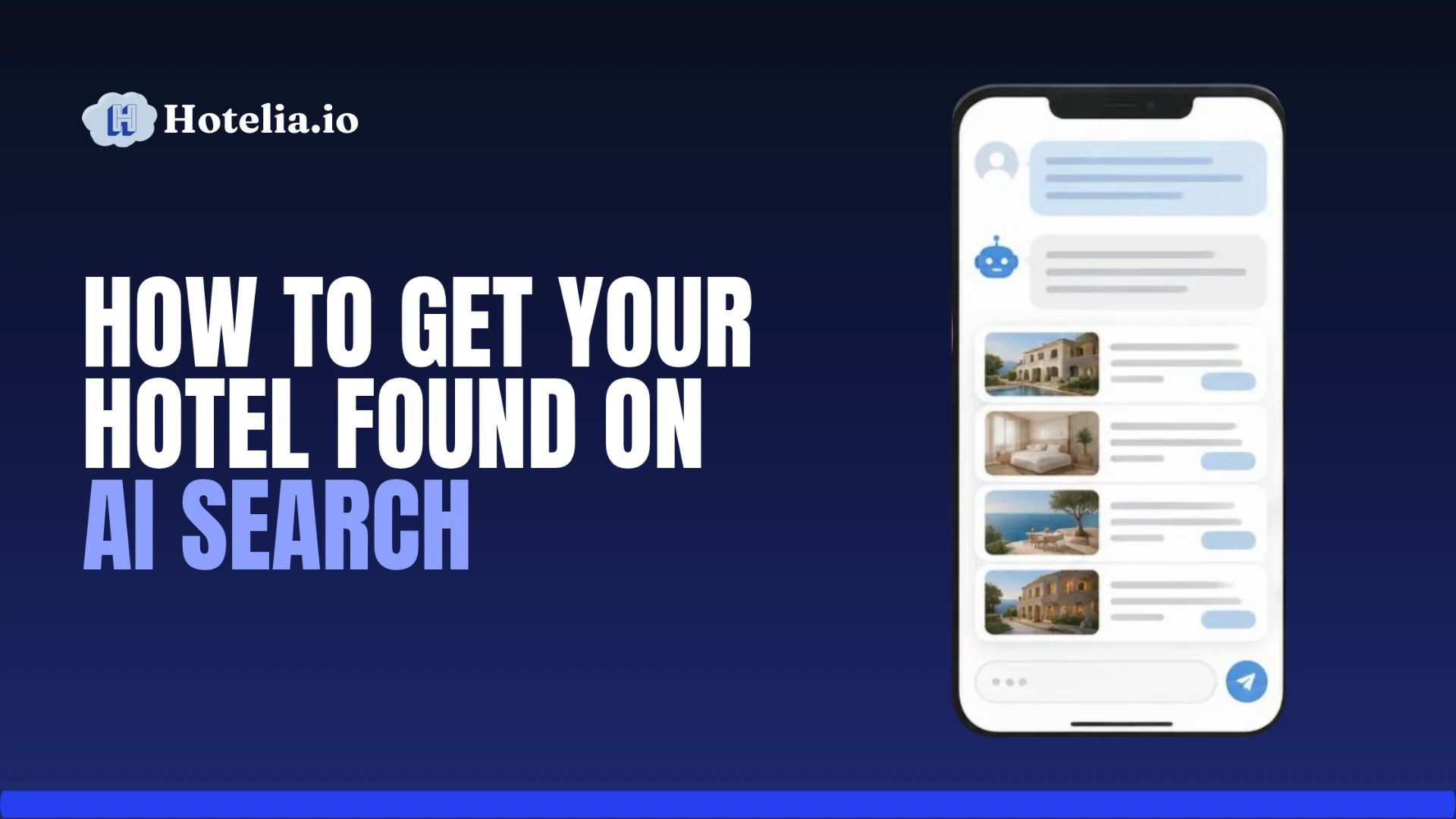
A traveler planning a weekend used to open Google and scroll. Now a growing number of them open ChatGPT and type something like "where should I stay in Ojai for a quiet weekend?"
They get back a short list. Four or five properties, with a sentence about each. No ten blue links, no ads, no page two.
If your hotel is on that list, you just got in front of someone with real intent and no OTA in the middle. If you are not, you never knew the conversation happened.
Most independent hotels have never checked. That is the opportunity.
This is the deep dive on AI search specifically. If you want the broader foundation first, getting your Google Business Profile, Maps listing, and schema markup right, start with our guide to getting your hotel found online in 2026. Then come back here for the AI-specific moves most hotels have not made yet: claiming a ChatGPT business profile and opening your site to AI search crawlers.
Why AI search matters for independent hotels
OTAs have always been discovery engines. Travelers go there to find places, and you pay a commission for the introduction. That trade is fine as far as it goes, but it means someone else owns the first moment of the relationship.
AI assistants are becoming a new discovery engine, and right now the field is wide open. The big chains have teams working on this. Most independent properties have not touched it. Being early is worth more here than being polished.
The other thing worth knowing: when AI names your hotel, it usually links to your own website, not an OTA listing. That is a direct booking waiting to happen, with no commission attached.
Step 1: Find out whether AI knows your hotel
Start here, because it takes two minutes and it changes how seriously you take the rest.
Open ChatGPT and Perplexity and ask the questions your guests would ask:
- "Best boutique hotel in [your town]"
- "Where should I stay near [nearby landmark or park]"
- "Dog friendly inn in [your region]"
See whether you come up, how you are described, and whether the details are right. Write down what you find. You will want something to compare against in a few months.
Many hoteliers find they are missing entirely, or that the description is years out of date. Both are fixable.
Step 2: Claim your ChatGPT business profile
On November 10, 2026, OpenAI launched business profiles in ChatGPT, which work roughly like a Google Business Profile. You manage yours at chatgpt.com/business-hub.
Once you claim your listing you can set your website, hours, location, and description, and you get a dashboard showing profile views and clicks.
A few honest caveats. It is still in beta. Claiming is rolling out by region, and the automated business agent that answers customer questions is US only at launch, so what you can set up depends on where you are. You can generally only claim a listing ChatGPT already has, so yours may not be there yet, and there is an identity check to confirm you own the business before your insights turn on. Claiming also does not guarantee you show up more often. It simply means that when you do, the information is yours and it is accurate.
Set your booking page as the website link, not an OTA listing. Then make your name, address, phone, and amenities match your Google profile exactly. AI systems cross-check sources, and details that disagree tend to get skipped.
Step 3: Make sure AI search can read your website
This one catches a lot of properties by surprise. Many websites block AI crawlers by default, often through a setting the hotelier never chose. You can have a beautiful site and still be invisible.
There is an important distinction here. Some crawlers gather content for AI search results, and others gather content to train models. They are not the same decision.
If you want to be cited in AI answers, these are the ones to allow in your robots.txt file:
User-agent: OAI-SearchBot
Allow: /

User-agent: Claude-SearchBot
Allow: /

User-agent: PerplexityBot
Allow: /
GPTBot and ClaudeBot are training crawlers. Whether you allow those is a separate choice, and blocking them does not keep you out of AI search results.
Send that block to whoever manages your site and ask them to confirm it is in place. If you use a website builder, search its settings for AI crawler or bot access. One note: changes to robots.txt can take about a day to take effect, so do not panic if nothing changes overnight.
Step 4: Answer the questions travelers actually ask
AI pulls direct answers. It rewards pages that state something plainly, like "the Cedar Inn is 18 minutes from the Great Sand Dunes National Park entrance," and skips pages that bury the point in atmosphere. "Nestled in the foothills, an escape from the ordinary" gives an AI nothing to match a query against.
Add an FAQ section that answers what guests actually email you about, distance from the airport, parking, whether you allow dogs, whether breakfast is included, the cancellation policy, with the answer in the first sentence.
We cover the plain-question FAQ format in depth in our guide to getting your hotel found online in 2026, so here it is enough to say this: specific, quotable copy is what gives an AI something to recommend, and it helps your human guests too.
Step 5: Get named on sites that are not yours
AI gives more weight to outside corroboration than to your own marketing copy. Anyone can say their hotel is charming. It counts for more when a local guide, a tourism board, or a travel writer says it.
Practical places to start:
- Your regional or state tourism board listing, which is usually free and underused
- Local guides and "where to stay in [town]" roundups
- Press, even small or regional
- Partnerships with nearby restaurants, outfitters, and venues that link to you
- Threads where travelers ask about your area, answered honestly as yourself
You do not need dozens of these. A handful of credible, consistent mentions moves the needle.
What this will not do
A fair word about expectations, because this space is full of overclaiming right now.
None of these steps guarantee you appear in AI answers. The systems are new, they change often, and nobody outside these companies fully knows how citations get chosen. Treat anyone promising guaranteed AI rankings with suspicion.
What these steps do is remove the reasons you would be excluded, and give AI accurate, quotable, corroborated information to work with. That is the part you control.
Where to start this week
If you only do one thing, do step one. Ask the question and see where you land. Most hoteliers find something surprising, and it makes the next four steps feel urgent instead of theoretical.
Then claim your profile and check your crawler settings. Those two take an afternoon and they are the difference between being findable and being invisible.
The FAQ page and outside mentions are slower work, but they compound, and they help your guests whether or not an AI ever reads them.
Travelers are going to keep asking AI where to stay. The hotels that show up in those answers will own that guest relationship from the first moment, on their own site, at their own rates, with nothing skimmed off the top. That is worth an afternoon.
At Hotelia, that is the whole idea: your website as your best booking channel, and your guests as your own. AI search is simply one more door that leads there.
Sources
Thanks for reading The Hotelia Dispatch!
Subscribe to get new posts delivered to your inbox.
See Hotelia in Action
Hotelia is a modern booking engine and property management platform built specifically for independent hotels. Keep more of what you earn with 0% commission on direct bookings.